Where Track Engineering Matters More Than Branding
We make high-level automotive performance accessible by offering high-quality components at fair prices, so that more enthusiasts can enjoy track days and true driving performance
Our brake discs in detail
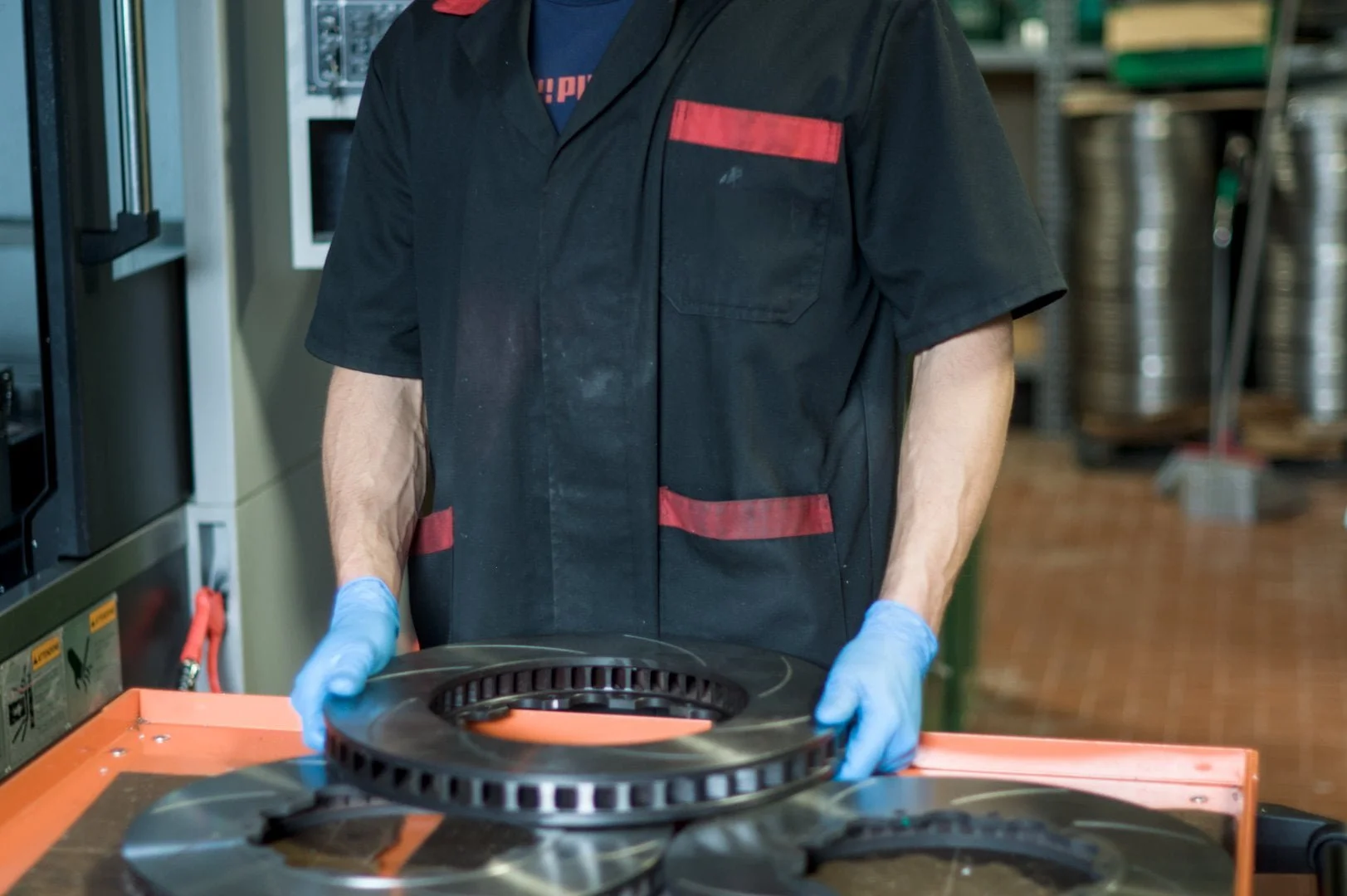
When trying to improve lap times during track days, time attack events, or endurance races, the braking system must ensure consistent braking power session after session. World4Track designs and manufactures floating two-piece brake discs that solve the thermal management issues faced by the most demanding drivers.
The central hat of our brake disc is made of 6061-T6 aluminum magnesium-silicon alloy, heat-treated to achieve a high strength-to-weight ratio and excellent corrosion resistance. The braking surface is made from a gray iron-carbon-silicon alloy, cast in Italy in the excellent and historic foundries located in the Bergamo area; this alloy allows for minimal mechanical deformation and excellent thermal dissipation.
Depending on the diameter, our braking surface uses from 36 to 72 internal helical channels (curved vanes) that act like a centrifugal fan, forcing an airflow from the center of the disc outward.
As in racing brake discs, we create curved slots that allow the gases formed between pad and disc to escape, ensuring excellent friction even at high temperatures.
The hat and braking surface are then joined using a floating mounting system, with zinc-coated pins, anti-vibration spring clips, and fasteners with a tensile strength rating of 12.9.
Why choose World4Track?
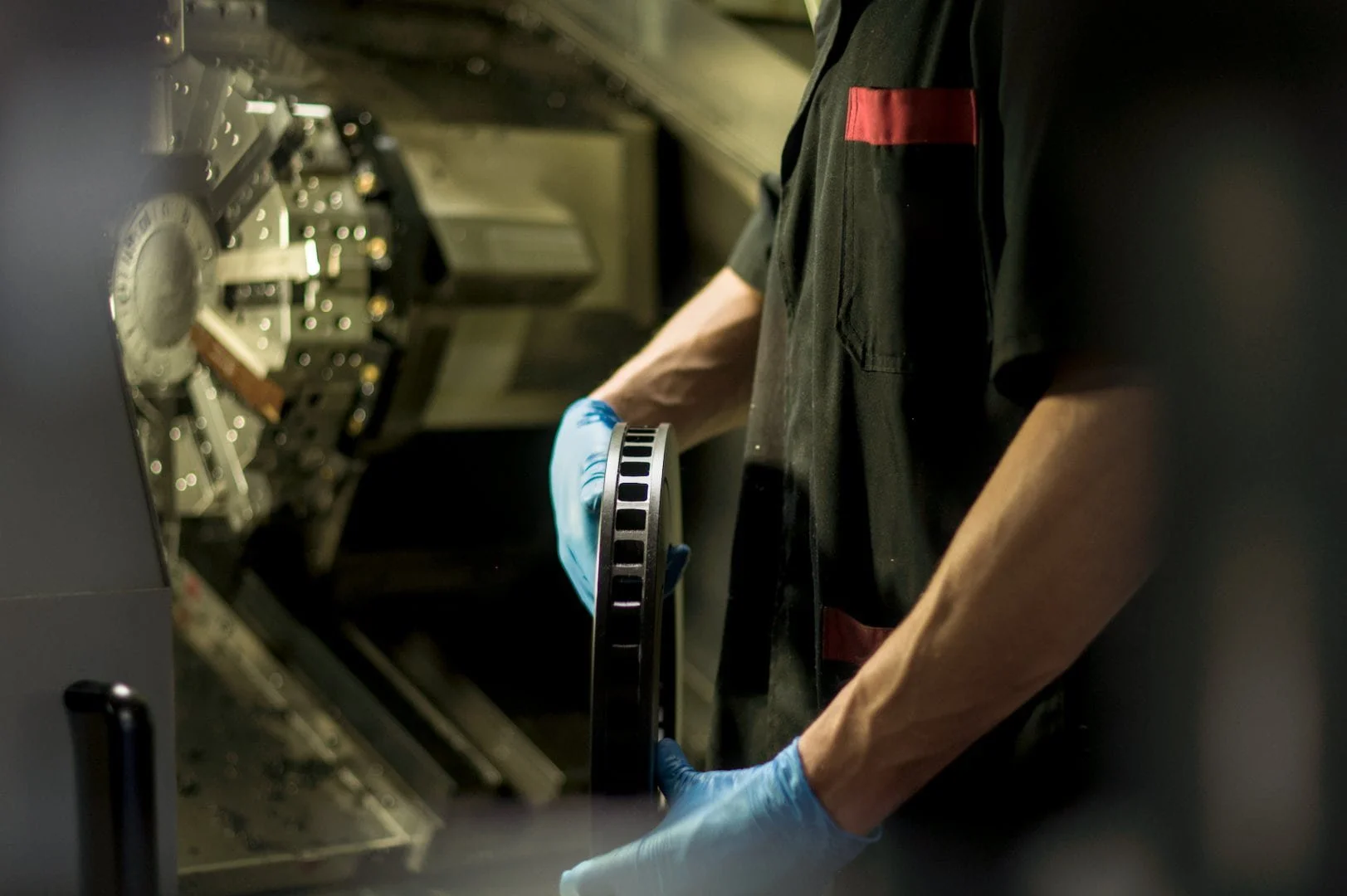
Our products are manufactured using CNC machines in our workshop, which has over 40 years of experience in mechanical production and machining.
Our two-piece brake discs are designed to be installed directly on the original calipers, without the need to upgrade to larger braking kits. This allows the brake balance engineered by the manufacturer to be maintained, as well as the proper functioning of the ABS, ensuring safety and reliability.
Once an initial kit is purchased, we also offer replacement rotor rings separately, allowing for significant savings on the overall cost of the disc.
One of the main advantages is the significant weight reduction: compared to original one-piece discs, an average saving of between 2 and 4 kg can be achieved. This result is made possible by replacing the cast iron bell with an aluminum one, thereby reducing unsprung mass.
Less weight means better performance: the car accelerates more easily and requires less energy during braking. In addition, the reduction in rotational inertia allows the braking system to be more efficient, as the braking force is used to slow down the vehicle rather than the disc itself.
The reduction in unsprung mass also improves suspension behavior, increasing comfort and driving precision. Finally, a lighter disc reduces the gyroscopic effect, making the steering more responsive and improving overall handling.