Understanding the Importance of Brake Rotors for Track Cars
When you're pushing your vehicle to its limits on the track, every component matters. But few systems face the extreme demands that your brakes endure during performance driving. At the heart of your braking system lies a critical component that can make or break your track day experience: the brake rotor.
Why Brake Rotors Matter More on Track Than Street
During spirited track driving, your brake system components work exponentially harder than in everyday driving. While street driving might bring your rotors to 200-300°F, aggressive track sessions can push temperatures beyond 1,000°F. This intense thermal cycling creates demands that standard rotors simply weren't designed to handle.
The physics are straightforward: kinetic energy must be converted to thermal energy every time you brake. On track, you're doing this repeatedly, often multiple times per lap, from much higher speeds. Your brake rotors serve as the primary heat sink for this energy conversion, and their ability to manage, dissipate, and withstand this heat directly impacts your lap times and safety.
Types of Brake Rotors for Performance Applications
Understanding brake rotor types helps you select the right setup for your track car maintenance needs and driving style.
Solid Rotors
Solid rotors are single-piece cast iron discs that work well for lighter vehicles or less demanding track use. While they're cost-effective and durable for street driving, their limited heat dissipation capacity makes them less ideal for serious performance driving applications. They retain heat longer and are more prone to fade during extended sessions.
Vented Rotors
Vented rotors feature internal cooling vanes between two friction surfaces, allowing air to flow through and dramatically improving heat dissipation. This design has become the standard for front brake systems on most performance vehicles. The vanes act like a centrifugal pump, drawing cool air in from the center and expelling hot air at the outer edge as the rotor spins.
Slotted Rotors
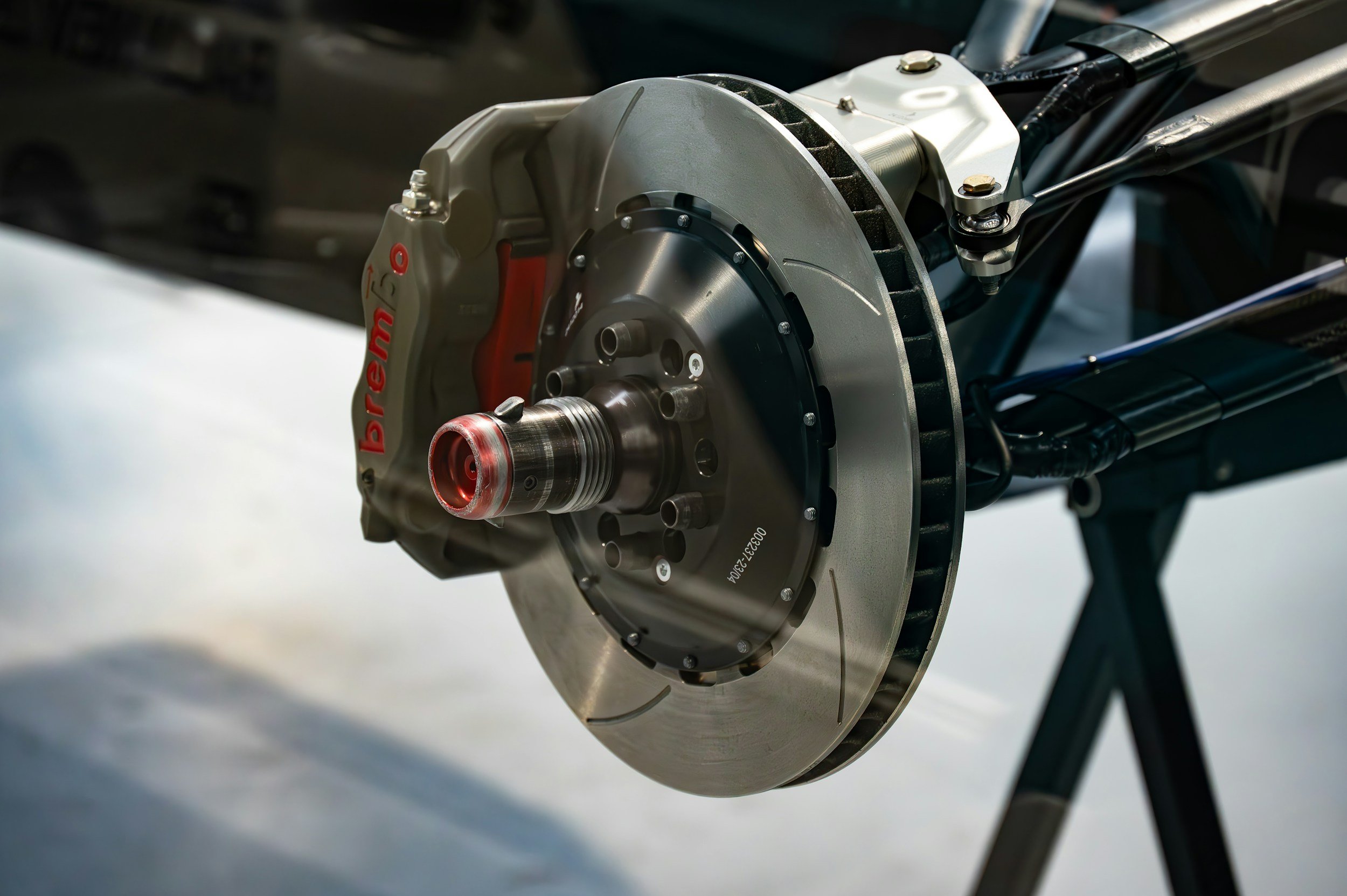
Slotted rotors incorporate machined grooves across the friction surface. These slots serve multiple purposes: they help evacuate brake dust and gases that form between the pad and rotor, maintain a fresh pad surface by continuously shaving away the top layer, and can improve initial bite. For track car maintenance, slotted rotors offer excellent performance without the fragility concerns of drilled rotors.
Drilled Rotors
Drilled rotors feature holes completely through the friction surface. While they look aggressive and do provide additional heat dissipation, they create stress concentration points that can lead to cracking under severe thermal cycling. Modern track applications typically favor slotted designs over drilled for this reason.
J-Hook Rotors
J-hook rotors feature a distinctive curved slot pattern that resembles the letter "J" machined into the friction surface. This design combines the benefits of traditional slotted rotors with enhanced pad degassing and debris evacuation. The J-hook pattern helps maintain a consistent pad contact patch while providing superior bite characteristics, particularly beneficial during trail braking and threshold braking scenarios common in performance driving. Many track enthusiasts find J-hook rotors offer an excellent middle ground between aggressive slotted designs and the smoothness of blank rotors, with the added advantage of reducing the likelihood of pad taper wear.
Two-Piece Rotors
Two-piece rotors separate the friction ring from the mounting hat, typically using an aluminum center hat with a steel or iron friction ring. This design reduces unsprung weight, allows for thermal expansion without warping, and makes replacement more economical since you only replace the friction ring. They represent the premium solution for dedicated track cars.
Brake Rotor Materials: Beyond Cast Iron
The material science behind brake rotor materials has evolved significantly, offering options beyond traditional gray cast iron.

Cast Iron Rotors
Traditional cast iron remains the most common material due to its excellent friction characteristics, heat capacity, and cost-effectiveness. Modern metallurgy has improved these rotors significantly, with better carbon content and grain structure providing improved resistance to thermal shock and cracking.
Carbon Ceramic Rotors
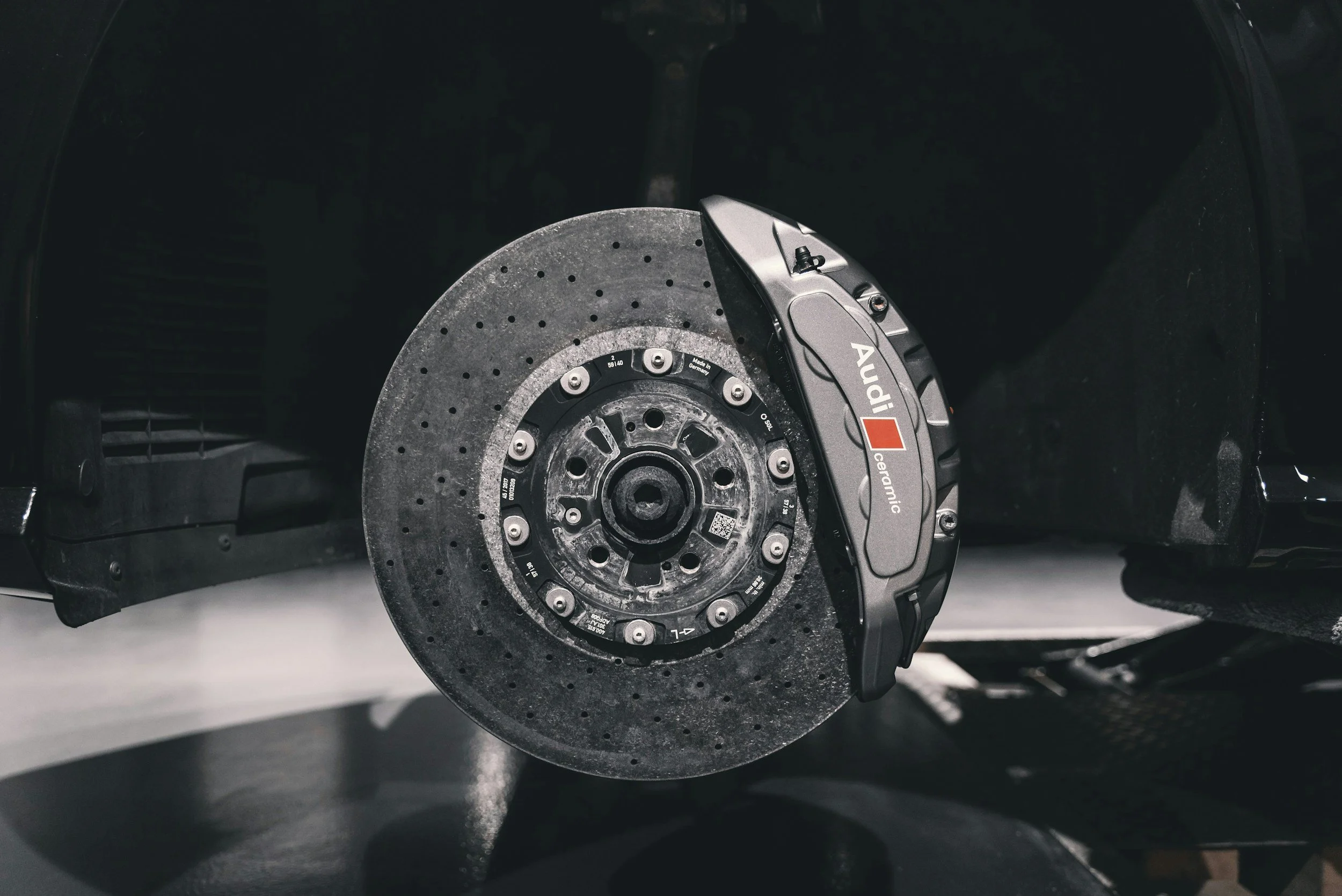
Carbon ceramic composite rotors represent the pinnacle of brake rotor technology. These exotic discs offer exceptional heat resistance, minimal weight, and virtually no fade. They maintain consistent performance even when glowing red hot. However, their extreme cost and requirement for specific pad compounds limit them to high-end applications. They also require longer warm-up periods and can feel less responsive during the first few laps.
Steel Rotors
Some manufacturers offer rotors made from high-grade steel alloys, which can provide excellent durability and heat cycling characteristics. These sit between cast iron and carbon ceramic in terms of both performance and cost.
Heat Management: The Critical Factor
The relationship between heat and brake system components cannot be overstated. Excessive heat causes brake fluid to boil, pads to fade, and rotors to crack or warp. Effective heat management involves several strategies working together.
Rotor mass plays a dual role: more mass means more heat capacity but also more rotational inertia and unsprung weight. Track-focused rotors balance these factors carefully. The surface area determines how quickly heat can radiate away, while internal vane design controls airflow for convective cooling.
Proper brake rotor materials selection ensures the rotor can withstand repeated heat cycling without deteriorating. Quality rotors use metallurgy specifically designed to resist thermal shock and maintain dimensional stability across wide temperature ranges.
Selecting the Right Rotors for Your Track Application
Choosing appropriate brake rotor types for your specific application requires considering several factors.
Your vehicle weight and power output determine the thermal load your brakes must handle. A lightweight momentum car has very different requirements than a heavy, high-horsepower machine. The track layout matters too: circuits with heavy braking zones demand more robust systems than flowing tracks with gentler brake demands.
Consider your skill level and speed honestly. An intermediate driver doing 20-minute sessions has different needs than an advanced driver running qualifying pace in sprint races. Your budget also plays a role, but remember that brake system components are not the place to cut corners when it comes to safety.
For most track day enthusiasts, high-quality slotted vented rotors provide the best balance of performance, durability, and value. As you progress and speeds increase, two-piece rotors become worth the investment. Reserve carbon ceramic for dedicated race cars or high-end sports cars where they're part of the original design.
Maintenance and Inspection Best Practices
Proper track car maintenance of your rotors extends their life and maintains safety margins.
Before each track day, measure rotor thickness with a micrometer at multiple points around each rotor. Most rotors have a minimum thickness specification stamped on them, operating below this compromises structural integrity. Check for cracks, particularly around mounting holes or along the edge of the friction surface. Small surface cracks are sometimes acceptable, but any crack extending to the edge or growing deeper requires immediate replacement.
Inspect the friction surface for heat checking (a fine pattern of surface cracks), glazing, or uneven wear. These indicate problems with pad compound selection, bedding procedure, or brake bias. After particularly demanding sessions, allow rotors to cool naturally. Never spray them with water to speed cooling, as thermal shock dramatically increases the risk of cracking.
Clean your rotors regularly to remove brake dust buildup, but avoid petroleum-based cleaners that can contaminate the friction surface. Isopropyl alcohol works well for this purpose.
The Bedding Process: Critical for Performance

New or resurfaced rotors require proper bedding to create the transfer layer that enables optimal performance driving. This process involves gradually heating the brake system through a series of moderate stops, then performing several harder stops from higher speeds to fully transfer pad material onto the rotor surface.
Skip this step, and you'll experience poor initial bite, uneven braking, and accelerated wear. The specific bedding procedure varies by pad compound, so always follow your pad manufacturer's recommendations. Generally, the process concludes with a cooling lap to let everything stabilize before parking.
Signs Your Rotors Need Replacement
Beyond thickness measurements, several symptoms indicate your rotors need attention. Pulsation through the brake pedal during straight-line braking typically indicates warped or unevenly worn rotors. A vibration through the steering wheel during braking suggests front rotor issues specifically.
Squealing or grinding noises can indicate worn pads, but can also result from rotor surface problems. Visual cracks, especially those extending to the friction surface edge, require immediate replacement. Blue or purple discoloration indicates overheating beyond the material's design limits, permanently changing its metallurgical properties.
If your pedal feel becomes spongy or requires more pressure for the same stopping power, while your fluid is fresh and properly bled, your rotors may have exceeded their thermal capacity and need replacement.
Upgrading Your Brake System Strategically
When upgrading brake system components for track use, approach it systematically. Start with high-performance brake fluid rated for at least DOT 4 or DOT 5.1 specifications, with a dry boiling point above 500°F. Fresh fluid represents the most cost-effective upgrade possible.
Next, invest in track-specific brake pads. These make a dramatic difference in fade resistance and consistency. If you're looking for detailed guidance on selecting the right pad compound for your needs, check out our comprehensive guide to high-performance brake pads. Only after maximizing pad and fluid performance should you consider rotor upgrades. Quality slotted rotors paired with appropriate pads will serve most drivers well.
If you're still experiencing brake fade or consistently exceeding your rotor's thermal capacity, then consider two-piece rotors or improving brake ducting to your existing rotors. Many production cars have ducting available as optional parts or aftermarket solutions.

Common Myths About Track Brake Rotors
Several misconceptions persist about brake rotor materials and designs. Cross-drilled rotors don't provide significant cooling advantages over modern slotted designs, despite their racing appearance. The holes were originally developed for early pad compounds that produced significant outgassing, a problem that modern materials have largely solved.
Larger rotors don't necessarily mean better braking. While increased diameter does provide greater mechanical leverage and more surface area for heat dissipation, it also adds rotational inertia and unsprung weight. The entire system must work together effectively.
You also don't need to replace rotors every time you change pads. With proper maintenance and within thickness specifications, quality rotors can last through multiple pad sets, especially with track-specific compounds that are less abrasive than street pads.
Ready to Upgrade Your Track Brake Setup?
Optimizing your brake system components transforms your track experience, providing the confidence to brake later and push harder. Whether you're just beginning your performance driving journey or looking to shave those final tenths off your lap times, proper rotor selection and maintenance form the foundation of a dependable brake system.
At World4Track, we understand the demands of track driving. Our specialized selection includes brake rotor types and brake rotor materials designed specifically for high-performance applications. Browse our shop to find the perfect rotors for your track car maintenance needs, or contact our team for personalized recommendations based on your vehicle and driving style.
Your brake system is your most important safety feature on track. Don't compromise, invest in components that match your ambitions and keep you coming back for more track time.
Looking for more track preparation advice? Stay tuned for our upcoming articles on brake fluid selection, pad compound choices, and complete brake system optimization for different track conditions.